Innovative vs Generic Peptide Therapeutics
The Two-Tiered Market Structure The peptide therapeutics market operates within a distinctive dual framework: innovative (branded) peptides protected by patents command premium pricing and dominant market share, while generic/biosimilar peptides offer cost-effective alternatives following patent expiration. Understanding this dynamic proves essential for pharmaceutical companies, healthcare providers, investors, and policymakers navigating the evolving landscape.
Market Share Distribution
Current Market Dynamics (2024)
- Innovative Peptides: 79.13% market share ($92.7 billion).
- Generic/Biosimilar Peptides: 20.87% market share ($24.5 billion).
This distribution reflects the relatively recent emergence of the peptide therapeutics field, with many blockbuster products still under patent protection. However, this balance shifts progressively as foundational patents expire and generic manufacturers develop biosimilar alternatives.
Projected Evolution (2030)
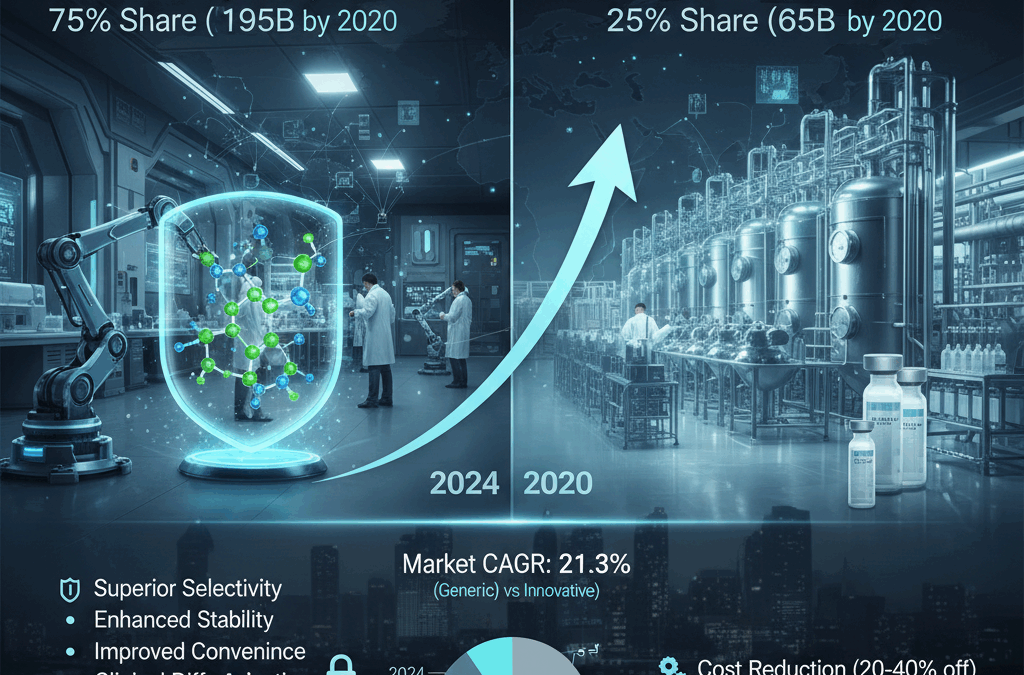
- Innovative Peptides: 75% market share ($195 billion).
- Generic/Biosimilar Peptides: 25% market share ($65 billion).
While innovative peptides maintain majority share, the generic segment grows faster in percentage terms—exhibiting a 21.3% CAGR compared to 13.1% for innovative products—reflecting market maturation and increased biosimilar development expertise.
Innovative Peptides: Characteristics and Advantages
Definition and Scope
Innovative peptides represent novel therapeutic entities or significant improvements over existing treatments, typically protected by:
- Composition Patents: Covering the peptide sequence itself.
- Formulation Patents: Protecting specific drug formulations and delivery systems.
- Method-of-Use Patents: Covering specific therapeutic applications and treatment protocols.
Key Advantages
- Superior Selectivity: Designed for high affinity with specific biological targets, reducing off-target interactions.
- Enhanced Stability: Advanced chemical modifications (like cyclization or unnatural amino acids) protect against enzymatic degradation.
- Improved Convenience: Innovative delivery systems (such as long-acting injectables or oral formulations) improve patient compliance.
- Clinical Differentiation: Often provide superior outcomes for patients who have not responded to standard therapies.
Generic and Biosimilar Peptides: Expanding Access
The Rise of Biosimilars As complex molecules, many follow-on peptides are regulated as biosimilars rather than simple generics, requiring:
- Demonstrated Analytical Similarity: Proof that the molecular structure is identical or highly similar to the reference product.
- Comparative Clinical Data: Evidence showing no clinically meaningful differences in safety or efficacy.
- Rigorous Manufacturing Controls: Ensuring consistency in complex synthesis and purification processes.
Market Impact
- Cost Reduction: Typically offered at 20–40% discounts compared to branded equivalents, increasing affordability.
- Market Expansion: Lower price points allow for broader inclusion in national health system formularies.
- Increased Competition: Entry of multiple players drives innovation in second-generation branded products as original manufacturers seek to maintain market share.
Strategic Implications for Stakeholders
For Pharmaceutical Companies Innovative leaders must focus on lifecycle management, including developing new delivery methods or combination therapies before patents expire. Generic players must invest in high-quality, large-scale manufacturing to achieve the margins necessary for success in a competitive landscape.
For Payers and Providers The growth of the generic segment provides opportunities for significant cost savings, especially in high-volume areas like diabetes and cardiovascular health. However, clinicians must be supported with evidence regarding the interchangeability of biosimilars to ensure patient confidence.
Conclusion The interplay between innovation and generic competition is the engine of the peptide market’s health. While innovative products drive the “frontier” of what is medically possible, generics ensure that these breakthroughs become accessible to the global patient population.