Introduction
Dermatology in 2026 has moved far beyond surface-level cosmetics.
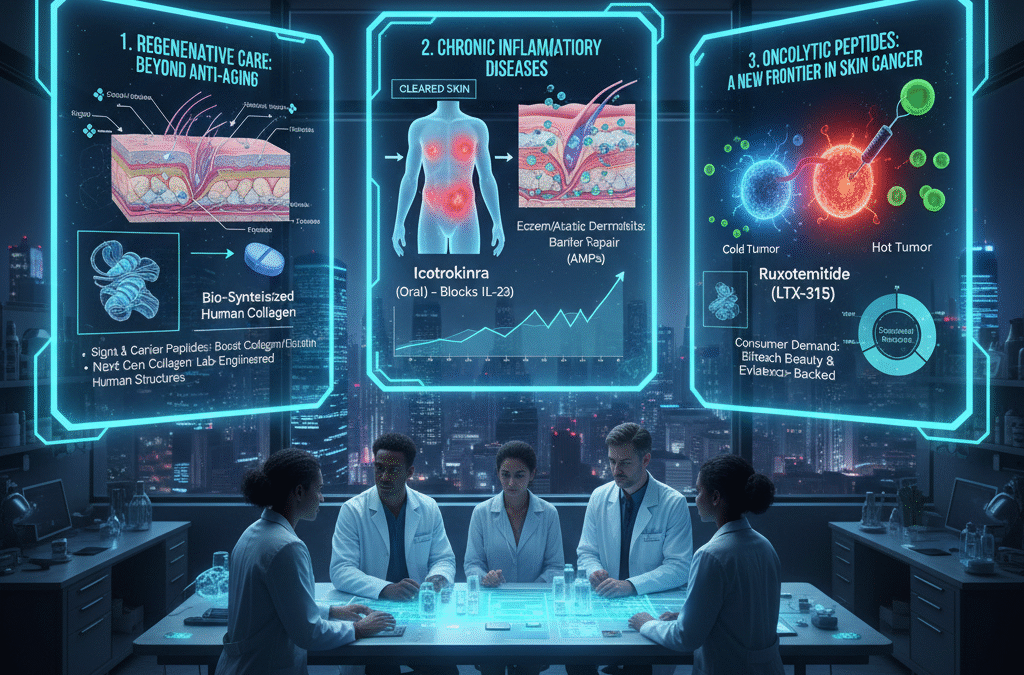
The field now centers on regenerative dermatology, where biotech peptides communicate directly with skin cells to repair damage, reduce inflammation, and even target skin cancer.
Once viewed as a marketing trend, medical-grade peptides are now essential tools in both clinical dermatology and advanced skincare. They deliver results comparable to aggressive treatments—without chronic irritation or long recovery times.
1. Regenerative Care: Beyond Anti-Aging
The concept of “anti-aging” has evolved.
In 2026, the focus is on skin longevity, early intervention, and cellular vitality.
Signal and Carrier Peptides
Signal and carrier peptides act as molecular messengers.
They instruct skin cells to increase collagen and elastin production naturally.
Thanks to advances in formulation science, these peptides are now more stable and penetrate deeper into the skin layers where regeneration occurs.
Next-Generation Collagen Peptides
A major breakthrough in 2026 is bio-synthesized human collagen.
Unlike animal-derived collagen, these lab-engineered peptides precisely replicate human structures.
As a result, skin compatibility improves, tissue remodeling accelerates, and inflammatory reactions decrease.
2. Treating Chronic Inflammatory Skin Diseases
Peptides are also transforming care for chronic inflammatory conditions.
They provide effective, steroid-sparing solutions for diseases like psoriasis and eczema.
Psoriasis Breakthroughs
In 2026, Icotrokinra emerged as a first-in-class oral peptide that blocks the IL-23 receptor.
Clinical data shows high rates of durable skin clearance, offering biologic-level precision in a once-daily pill.
PEPITEM and Targeted Inflammation Control
New research highlights peptides like PEPITEM, which naturally regulate inflammation in the body.
When applied topically, these peptides reduce psoriasis severity at levels comparable to steroid creams—without off-target side effects.
Barrier Repair for Eczema
For atopic dermatitis, antimicrobial peptides (AMPs) such as human β-defensins are now used in barrier-repair therapies.
They strengthen both the physical and immune defenses of compromised skin.
3. Oncolytic Peptides: A New Frontier in Skin Cancer
One of the most significant dermatology advances in 2026 is peptide-based cancer therapy.
Ruxotemitide (LTX-315)
Ruxotemitide is an oncolytic peptide injected directly into skin tumors.
It disrupts cancer cell membranes and converts “cold” tumors into “hot” ones.
This immune activation allows the body to attack both the treated tumor and distant lesions, showing promise for melanoma and basal cell carcinoma.
4. Market Growth and Consumer Shift
Consumer expectations are reshaping dermatology.
Demand for Evidence-Based Skincare
Patients in 2026 are increasingly time-poor.
They want multifunctional products that strengthen the skin barrier while improving firmness, tone, and pigmentation.
Personalized Dermatology
AI-powered diagnostics now allow clinicians to prescribe custom peptide blends.
These formulations are tailored to an individual’s skin microbiome and genetic profile, driving better outcomes and higher satisfaction.
Conclusion
From oral peptides for psoriasis to advanced serums for skin longevity, biotech peptides now form the backbone of modern dermatology.
By working with the skin’s biology rather than against it, peptide therapies deliver safe, effective, and sustainable results. In 2026, regenerative dermatology is no longer the future—it is the standard of care.