Introduction
In 2026, global healthcare faces a dual threat.
Viral pandemics persist, while antimicrobial resistance (AMR) continues to rise quietly but steadily.
Traditional antibiotics are losing effectiveness. Meanwhile, many viral infections still lack definitive cures. In response, peptide therapeutics are stepping forward. By mimicking the body’s natural defense systems, peptides offer a powerful biological alternative to conventional chemical drugs.
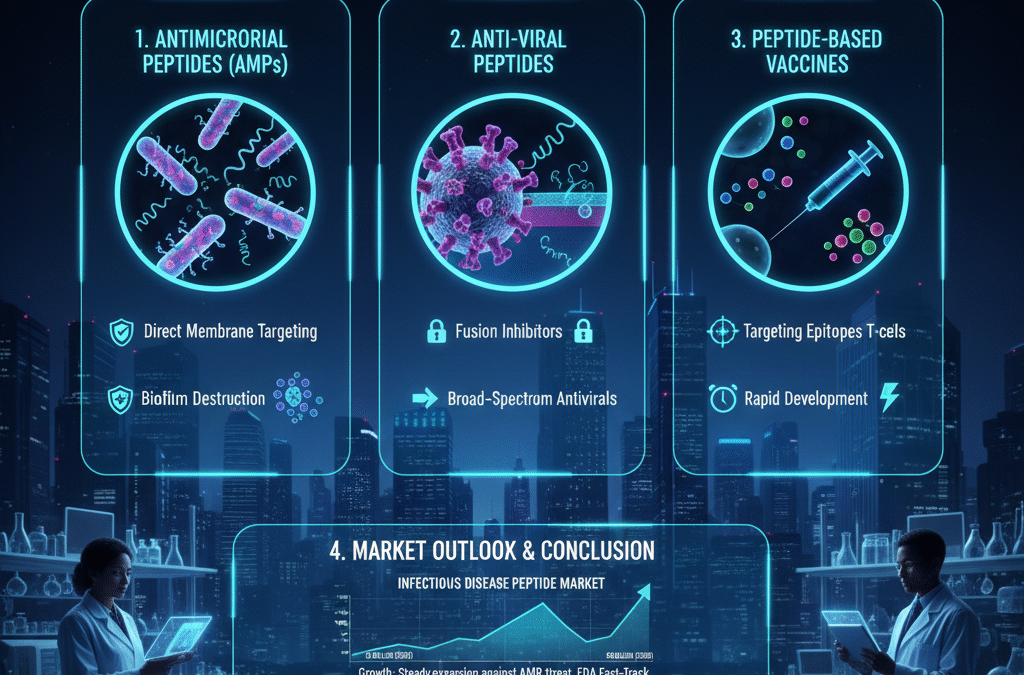
1. Antimicrobial Peptides (AMPs): Nature’s Antibiotics
Antimicrobial peptides are found throughout nature as part of the innate immune system.
In 2026, these molecules are being refined and engineered for clinical use.
Direct Membrane Targeting
Unlike traditional antibiotics that target internal bacterial enzymes, AMPs attack the bacterial cell membrane itself.
This physical disruption makes it extremely difficult for bacteria to develop resistance.
As a result, AMPs represent a promising solution to drug-resistant infections.
Biofilm Disruption
Biofilms remain one of the biggest challenges in hospital-acquired infections.
These protective layers shield bacteria from antibiotics and immune responses.
New synthetic peptides are designed specifically to penetrate and dissolve biofilms. Once disrupted, bacteria become vulnerable to treatment again.
2. Antiviral Peptides: Blocking Viral Entry
In 2026, antiviral peptide development focuses on entry inhibition—stopping viruses before they infect human cells.
Fusion Inhibitors
Peptides such as Enfuvirtide paved the way for more stable and potent fusion inhibitors.
These peptides prevent viruses from fusing with host cell membranes, effectively halting infection at the earliest stage.
Broad-Spectrum Antivirals
Researchers are also developing peptide cocktails that target conserved regions of viral proteins.
This strategy could allow a single therapy to work against multiple strains of a virus, including rapidly mutating pathogens.
3. Peptide-Based Vaccines: Precision Immunization
Peptide vaccines are no longer experimental.
In 2026, they are widely used in clinical settings.
Targeting Specific Epitopes
Rather than using whole viruses, peptide vaccines include only the pathogen’s epitopes—its unique molecular fingerprints.
This approach triggers a precise immune response while eliminating the risk of vaccine-induced illness.
Rapid Manufacturing
Because peptides are chemically synthesized, vaccine production is dramatically faster.
This speed is critical during outbreaks, where traditional egg-based or cell-culture vaccines may take months to scale.
4. Market Outlook for Infectious Disease Peptides
Although metabolic and oncology peptides dominate market share, infectious disease peptides remain a vital growth area.
Market Size and Growth
- 2026 valuation: ~$8 billion
- Outlook: Steady growth as AMPs receive FDA fast-track designations
As drug-resistant “superbugs” become more common, demand for peptide-based anti-infectives continues to rise.
Conclusion
Peptides are redefining how infectious diseases are treated.
By replacing broad chemical drugs with molecules that mirror the body’s own defenses, peptide therapeutics provide a more resilient, targeted, and rapid-response solution.
In a world shaped by pandemics and resistance, peptides offer a powerful new toolkit for global health.