Introduction
The gastrointestinal (GI) tract is one of the body’s most powerful peptide-producing systems.
It releases hormones that regulate digestion, nutrient absorption, appetite, and immune response.
In 2026, GI peptides are rapidly moving from the research bench to everyday clinical care. With the global constipation treatment market valued at over $14 billion, demand for effective peptide-based therapies has never been higher.
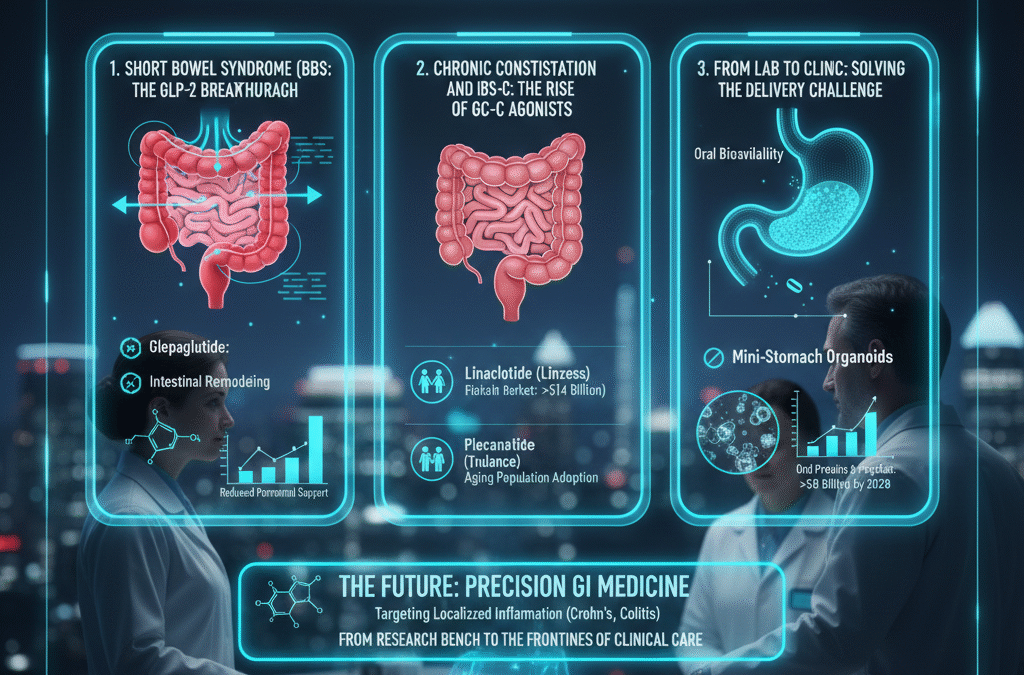
1. Short Bowel Syndrome (SBS): The GLP-2 Breakthrough
Short Bowel Syndrome occurs when patients cannot absorb enough nutrients due to a shortened or non-functioning small intestine. Historically, this condition required lifelong intravenous nutrition.
That is now changing.
Glepaglutide and Intestinal Recovery
In 2026, Glepaglutide, a long-acting GLP-2 analogue, is under FDA review following successful Phase 3 trials.
Clinical data shows it significantly reduces dependence on parenteral nutrition by stimulating intestinal growth and improving absorption.
Intestinal Remodeling Beyond Absorption
Recent studies from 2025–2026 reveal an even broader benefit.
GLP-2 analogues actively remodel the intestinal environment by increasing microbial diversity and reducing inflammation. As a result, patients experience more durable improvements in gut function.
2. Chronic Constipation and IBS-C: The Rise of GC-C Agonists
Peptides targeting the guanylate cyclase-C (GC-C) receptor are reshaping treatment for Chronic Idiopathic Constipation (CIC) and IBS-C.
Linaclotide (Linzess)
Linaclotide has become a cornerstone therapy. Its impact expanded further after FDA approval for pediatric patients aged 6–17, addressing a long-standing gap in pediatric gastroenterology.
Plecanatide (Trulance)
Plecanatide continues to gain traction, particularly among older adults.
By mimicking human uroguanylin, it regulates intestinal fluid and motility without the systemic side effects seen with older laxatives.
3. From Lab to Clinic: Solving the Delivery Challenge
One of the biggest obstacles for GI peptides has been the acidic environment of the stomach, which typically degrades peptides before they can act.
That barrier is now falling.
Oral Bioavailability Breakthroughs
In 2026, advances in macrocyclic peptides and specialized enteric coatings allow peptides to survive digestion and work effectively in pill form. As a result, the oral proteins and peptides market is projected to exceed $8 billion by 2028.
Mini-Stomach Organoids
A major research breakthrough from University College London has introduced lab-grown mini-stomach organoids. These assembloids replicate human digestion and allow researchers to test new peptide therapies for rare gastric diseases with unprecedented accuracy.
4. The Future: Precision GI Medicine
Looking toward 2030, the GI peptide pipeline is filled with highly targeted therapies.
“Smart” peptides are being designed to treat localized inflammation in Crohn’s disease and ulcerative colitis.
By activating receptors such as GLP-1 to suppress inflammatory regulators like NF-κB, these therapies offer molecular precision rather than broad immunosuppression.
Conclusion
From long-acting GLP-2 analogues for rare diseases to daily GC-C agonists used by millions, 2026 marks the year GI peptides fully entered clinical practice.
These therapies do more than manage symptoms.
They actively adapt, restore, and heal the human gut—setting a new standard for digestive care.